
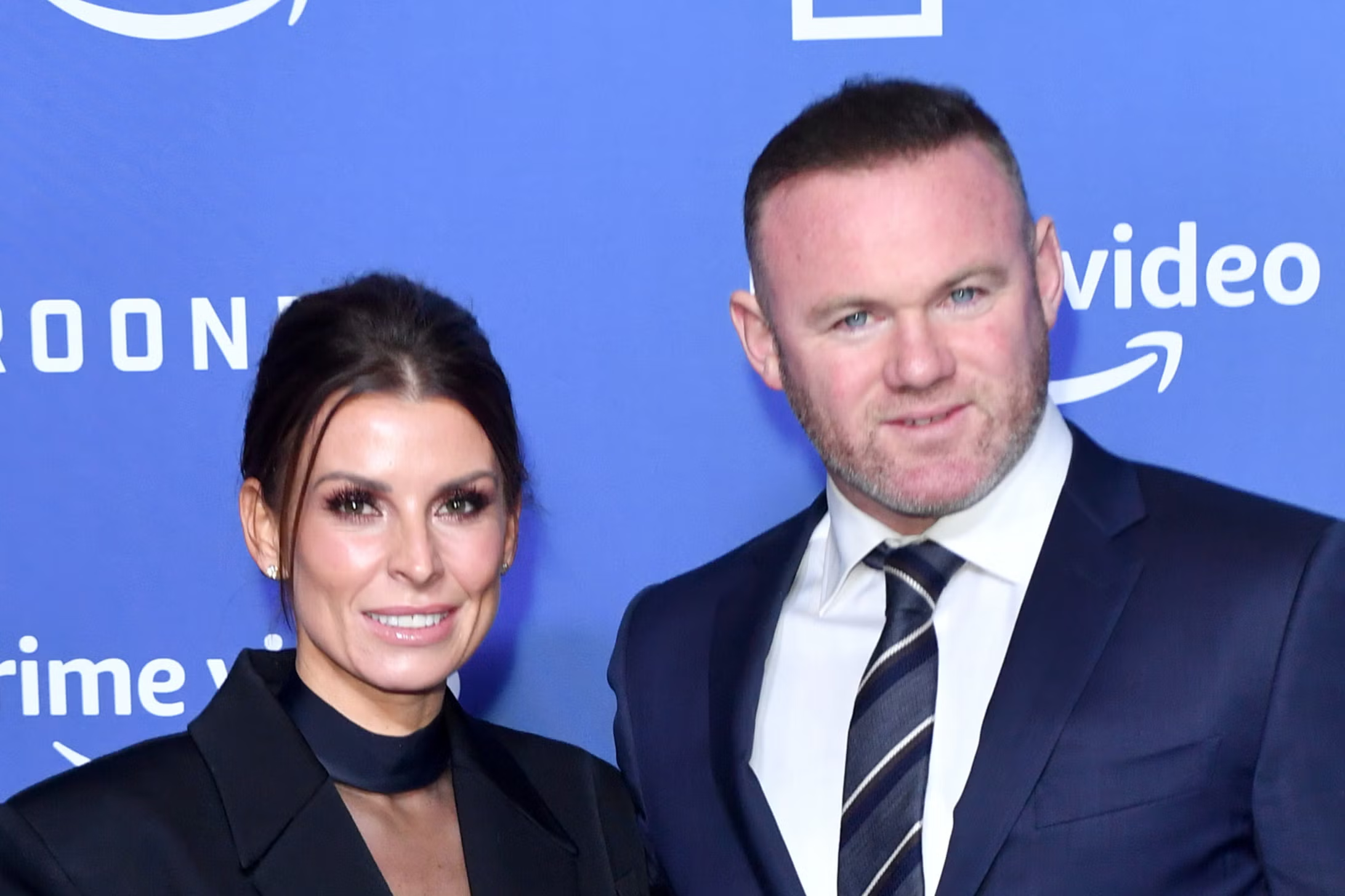
Wayne Rooney wife Coleen Rooney news continues to generate attention as the couple navigates public life while maintaining a remarkably grounded family dynamic. Their relationship has evolved from tabloid scrutiny to become a case study in reputation management and strategic media positioning. What appears as simple holiday photos or casual statements actually signals careful boundary-setting in an attention economy that rewards conflict over stability.
The Signals Behind Public Appearances And What They Actually Mean
Coleen’s recent return to public visibility through reality television wasn’t spontaneous. She explained that her children reaching certain ages created the conditions for re-engagement with media opportunities she had deliberately stepped away from. The timing reveals strategic thinking about when family vulnerability decreases enough to justify renewed exposure.
This calculus operates differently than it did previously. The risk profile shifts when children move beyond certain developmental stages, and the household gains resilience against external pressure. Coleen’s framing positioned her choice as empowerment rather than necessity, which matters in how audiences interpret motivation.
How Reputation Risk Compounds Over Decades Of Scrutiny
Wayne’s acknowledgment that Coleen kept him “on the path” for over two decades represents more than gratitude. It’s a public accounting of partnership value in measurable terms, using language that frames stability as achievement rather than default outcome. From a practical standpoint, this narrative counters years of speculation by reframing who holds influence within the relationship structure.
The statement during a podcast with a former teammate created peer-validated context. When reputation management requires rebuilding, third-party platforms with built-in credibility offer more leverage than controlled environments. The choice of venue wasn’t accidental.
Privacy Strategy And The Economics Of Selective Disclosure
The family’s Christmas imagery follows a pattern of controlled visibility that protects individual identity while satisfying public curiosity. Matching pajamas and coordinated aesthetics create shareable content without revealing meaningful personal information. This approach lets them participate in attention cycles without surrendering privacy boundaries that matter.
Look, the bottom line is that selective disclosure creates value by establishing what remains protected. When every family moment isn’t documented, the ones that are shared carry more perceived authenticity. The strategy works because it acknowledges audience interest without treating every moment as transactional.
Media Cycle Dynamics And Long-Term Narrative Control
Coleen’s reality television appearance generated sustained interest that extended well beyond the show’s conclusion. The runner-up positioning actually provided strategic advantage, creating momentum without the pressure that comes with winning. From a reputational standpoint, second place often yields better long-term outcomes than first in formats where overexposure becomes a liability.
Wayne’s subsequent comments about wanting to participate himself signal continued engagement with platforms that previously might have seemed beneath consideration. What I’ve learned is that format stigma erodes when ratings prove audience appetite. The data tells us these shows deliver reach that traditional interview formats can’t match anymore.
Reality Versus Perception In Partnership Longevity Claims
The public framing of their partnership emphasizes durability and mutual support, but the maintenance required for that outcome rarely gets detailed. Two decades together in high-pressure circumstances represents statistical outlier territory for relationships under constant external observation. The mechanisms that enable that longevity involve trade-offs that don’t translate cleanly into inspirational narratives.
What actually works involves recognizing when visibility serves the relationship versus when it threatens it. Coleen’s years away from media engagement protected capacity that she’s now deploying from a position of choice rather than desperation. That’s strategic patience playing out over time horizons most people can’t sustain. The reality is that successful navigation of public scrutiny requires treating attention as a resource to be managed, not a condition to be endured.